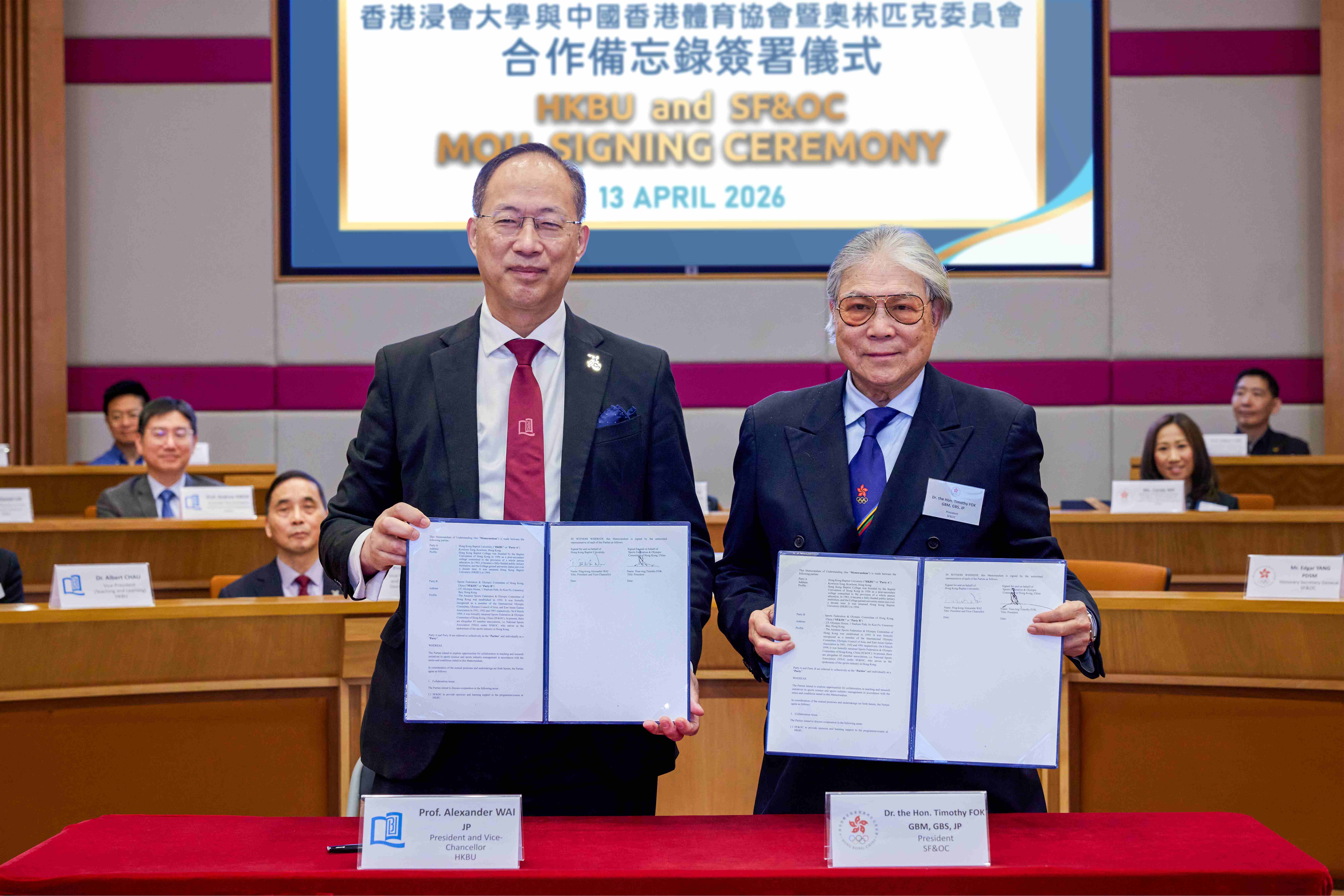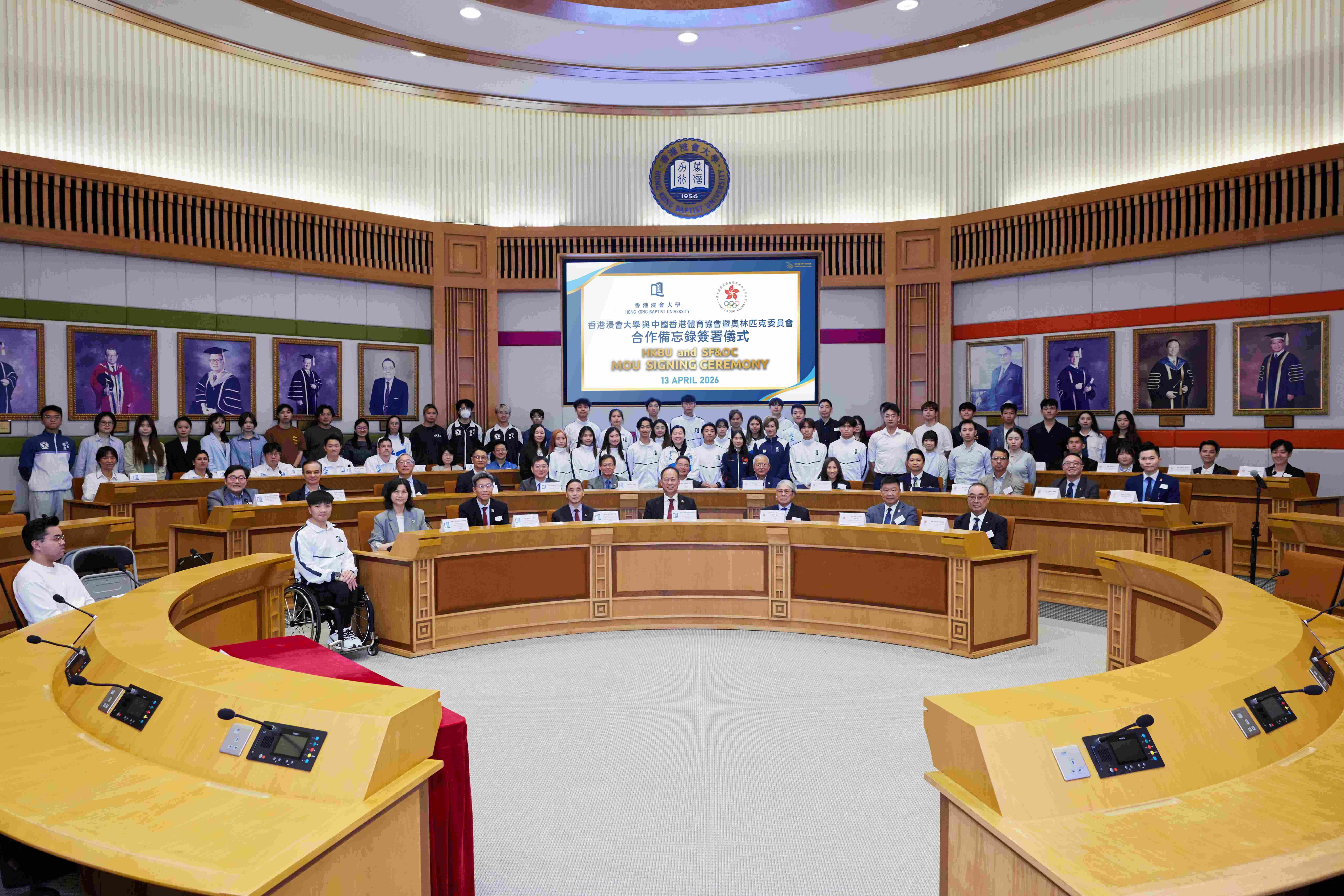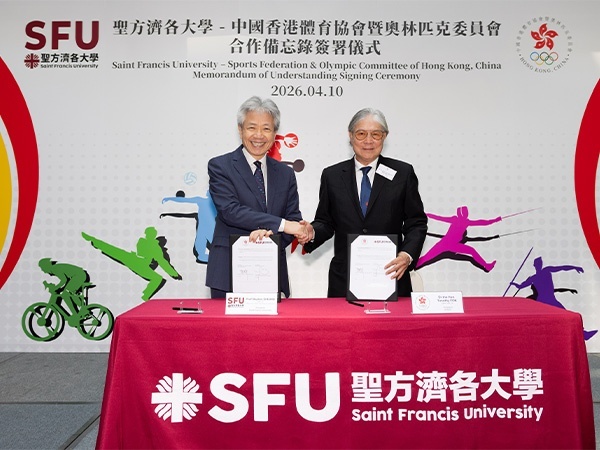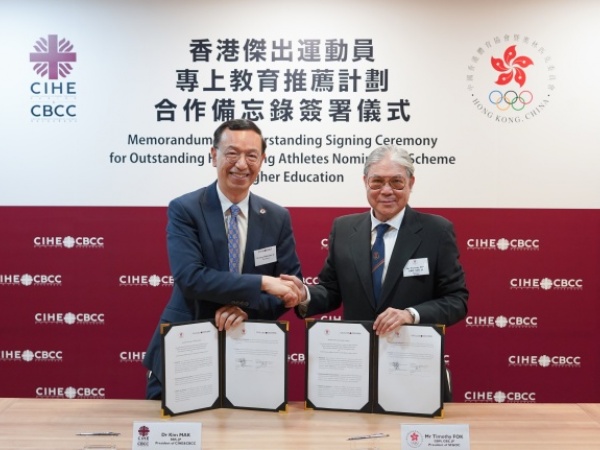


The Sports Federation & Olympic Committee of Hong Kong, China (SF&OC) and the Hong Kong Baptist University (HKBU) signed a Memorandum of Understanding (MOU) today (13 April 2026). The partnership aims to enhance talent development, promote innovation in sports technology, and foster knowledge exchange between academia and the sports sector, contributing to the overall advancement of sports in Hong Kong and the Greater Bay Area.
The MOU was signed by Dr Timothy FOK, President of SF&OC and Professor Alex WAI, President and Vice-Chancellor of HKBU. HKBU and SF&OC will explore and promote collaboration opportunities in teaching and research initiatives related to sports and sports industry management. These will include academic programme development, internship opportunities, recommendation of elite athletes for HKBU’s Talented Athletes Direct Admission Scheme, support for research projects, and organisation of seminars, conferences, or workshops to address issues and development needs in sports and sports industry management.
In his speech at the signing ceremony, Professor WAI said that HKBU has always placed great importance on sports sciences and sports industry development, recognising sports as a key area for research and talent nurturing. HKBU shares SF&OC’s vision of promoting the holistic development of athletes and looks forward to forging an even closer partnership with the Hong Kong Athletes Career & Education Department (HKACED) of SF&OC.
“Signing the MOU will deepen the collaboration between the two parties in various areas, including offering more flexible study arrangements which allow athletes to pursue sporting excellence and higher education at the same time; embarking on applied research together to enhance athletes’ sporting performance; and promoting the development of sports in Hong Kong to benefit the wider community,” said Professor WAI.
Speaking at the event, Dr Timothy FOK noted that HKBU has a solid foundation and unique advantage in nurturing student athletes and in areas related to sports management, enabling the University to offer athletes professional and customised learning opportunities. This aligns with SF&OC’s philosophy of supporting athletes’ all-round development and makes the MOU particularly meaningful.
“Under this collaboration framework, athletes recommended by HKACED and successfully admitted to HKBU will receive comprehensive learning support, as well as benefit from the support measures HKBU provides for student athletes. This will enable them to balance training, competitions, and academic studies more effectively, laying a strong foundation for their future development,” added Dr FOK.
HKBU student-athletes and alumni, including LAU Chi Lung, a current student and wushu athlete; alumna POON Pak Yan, a former rugby and athletics athlete; and alumna Joey CHAN, a former squash athlete, shared their experience in balancing sports and studies, and their journey from professional athletes to pursuing new careers.
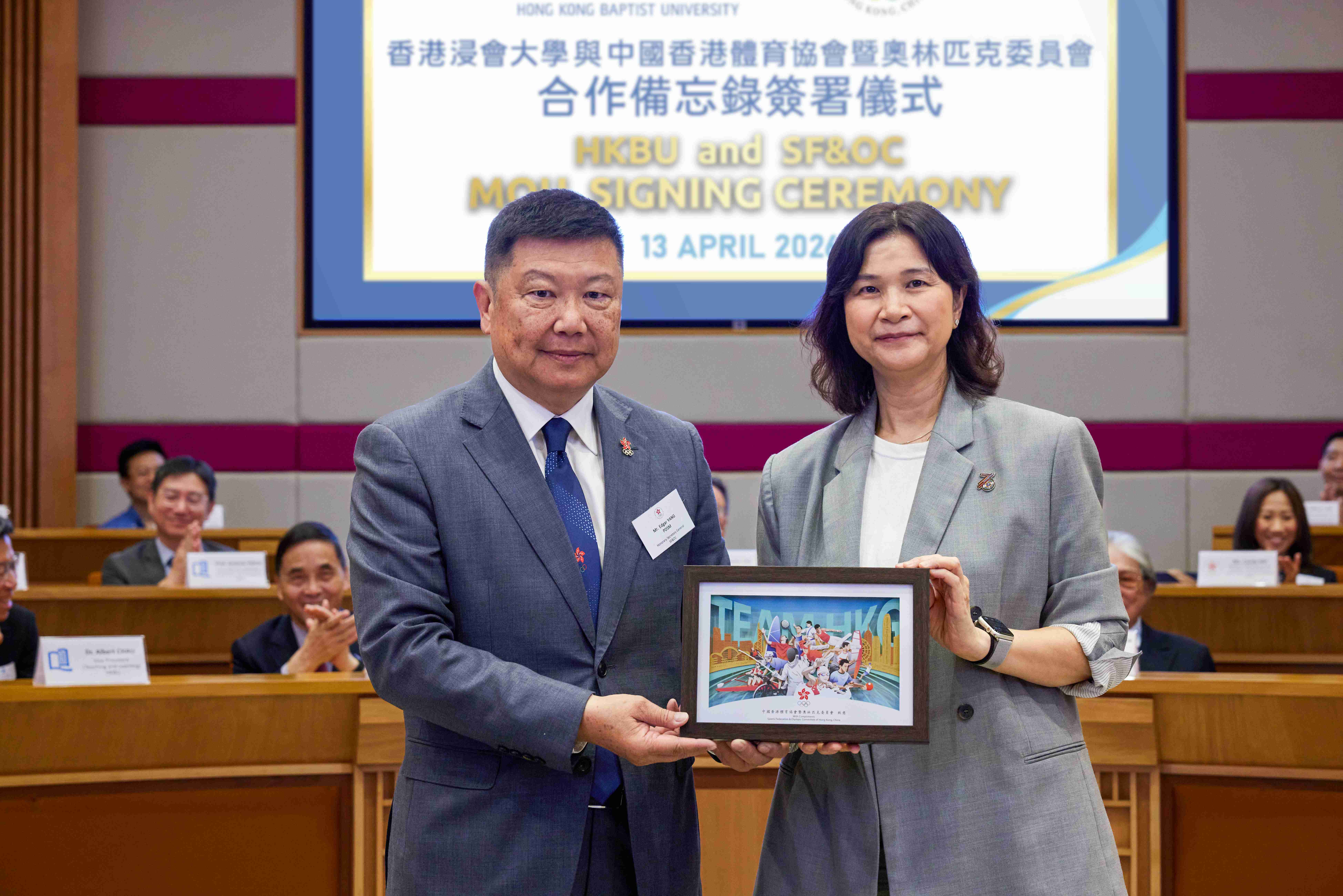
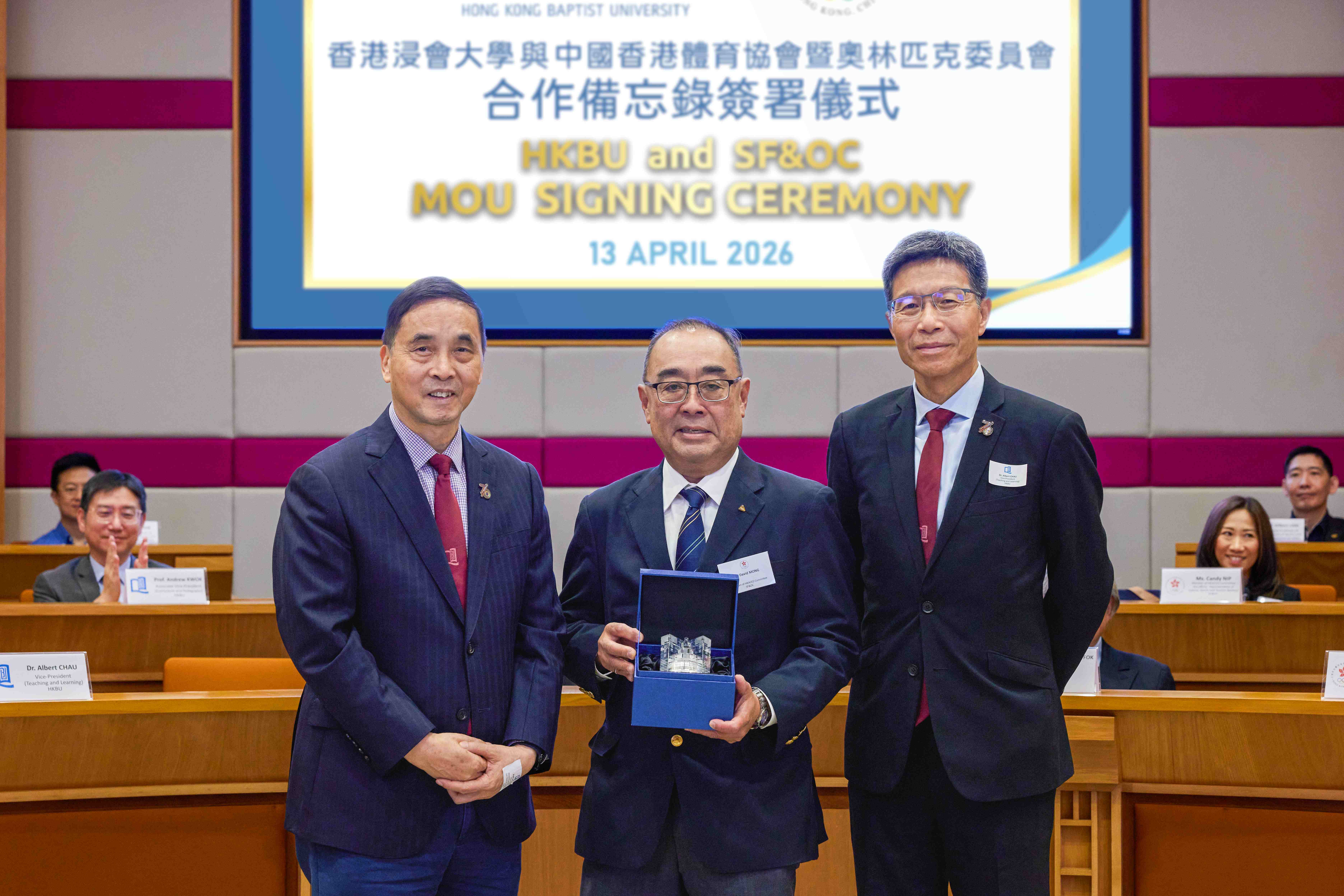
Guest representatives of SF&OC who joined the signing ceremony included Mr Edgar YANG, Honorary Secretary General; Dr David MONG, Chairman of HKACED Committee; Ms Candy NIP (Ex-officio - Representative of Culture, Sports and Tourism Bureau), Dr Karl KWOK, Mr CHENG Ka Ho, and Mr Kent YAU, Members of HKACED Committee; and Mr Albert MAN, Chief Executive.
Guest representatives of HKBU who joined the signing ceremony were Professor LYU Aiping, Vice-President (Research and Development) cum Dean of Graduate School; Dr Albert CHAU, Vice-President (Teaching and Learning); Ms Christine CHOW, Vice-President (Administration) and Secretary; Professor Terence LAU, Interim Chief Innovation Officer; Professor LIU Jiming, Associate Provost; and Professor Andrew KWOK, Associate Vice-President (Curriculum and Pedagogies).
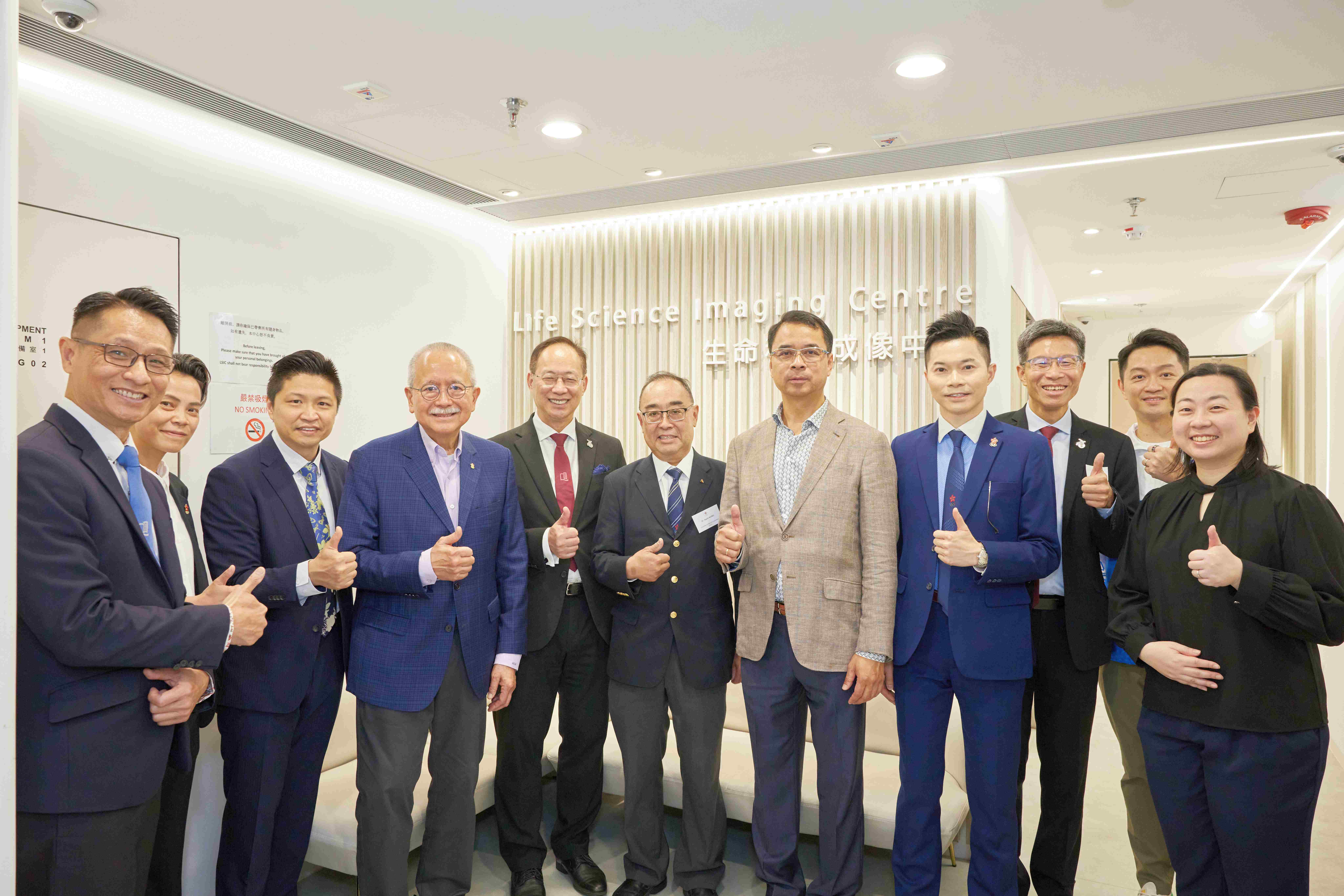
After the MOU signing ceremony, SF&OC representatives visited HKBU’s Life Science Imaging Centre, a central research facility at the University to promote individual and collaborative research on transdisciplinary neuroscience studies.